
CLEANING YOUR STAINLESS-STEEL GROOMING TUB
By Daryl Conner, MPS, MCG
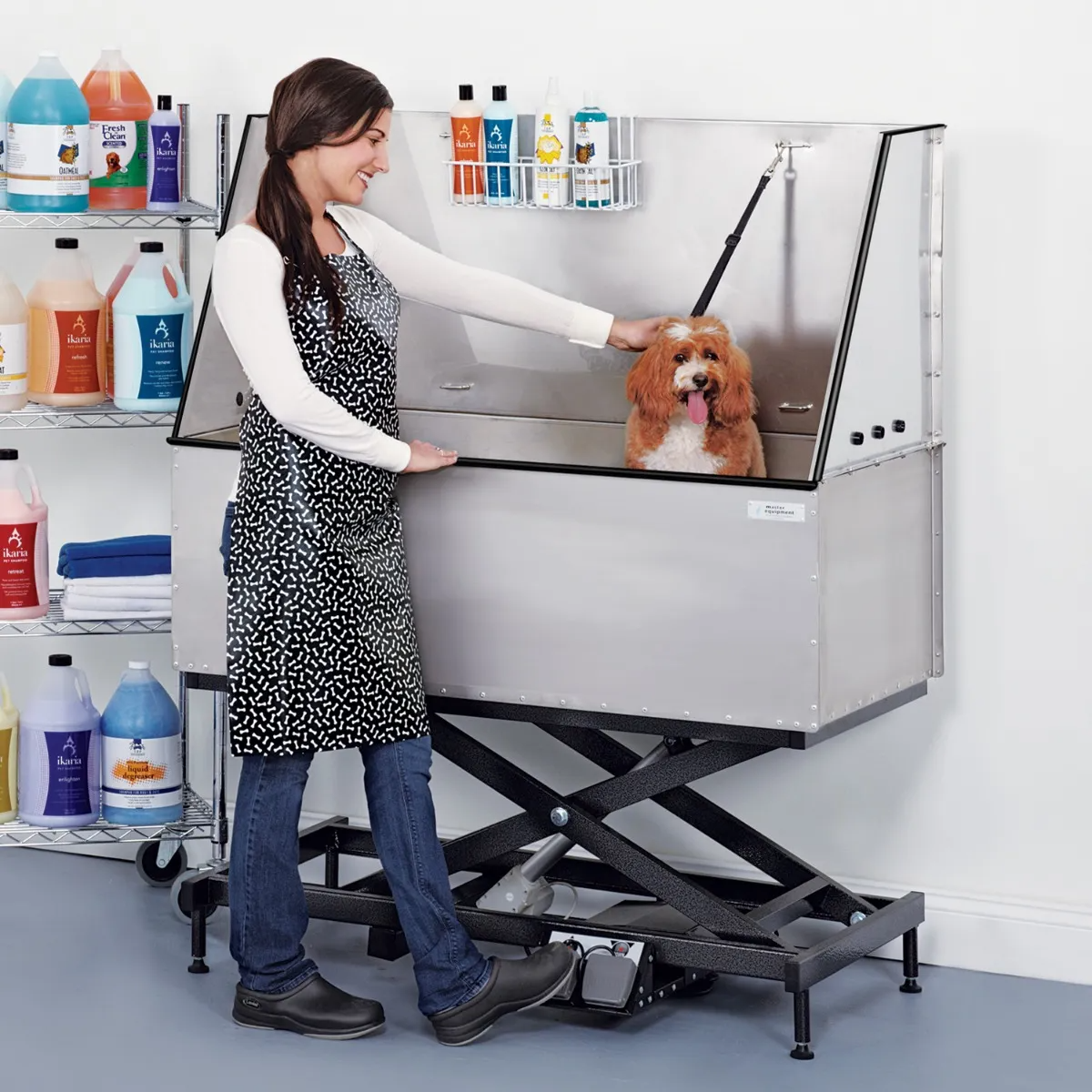
Stainless steel grooming tubs are wonderfully useful, sturdy, and easy to keep clean and shiny with little effort. Best of all, some of the most effective cleaning products are also safe to use around pets.
When you look at your tub, you will notice that the steel has a "grain" to it. For the best cleaning results and to prevent scratching the surface, always work with the grain of the metal. Cleaning the tub regularly will prevent the build-up of grime, soap scum, or potential mineral deposits from your water. Taking a few moments to wash and dry the tub at the end of each workday will keep it looking like new.
Choose mild products to keep the metal clean without damaging it. High-quality dish soap can be used, and white vinegar in a spray bottle is also effective. The benefits of cleaning with vinegar are that because it is mildly acidic, it effectively kills some bacteria and has a deodorizing effect while being perfectly safe around animals. Some people add a few drops of their favorite essential oil to the vinegar to give it a pleasant scent.
After spraying the metal with soap or vinegar, rinse well. Wipe the area with the metal's grain to remove all moisture. Lint-free microfiber clothes do a beautiful job without scratching. Wiping the metal dry will prevent spotting. To make the stainless shine, try using a Magic Eraser. Some people polish the metal with coconut or olive oil to give it a deep luster. Put a small amount of oil on a cloth and wipe the clean, dry surface with the grain.
If the tub appears to have small rusty spots, it is likely caused by mineral and iron deposits from your water. Use Bar Keepers Friend powder (available at most grocery and hardware stores) applied with a damp cloth and rubbed gently to remove these spots. Rinse well, then clean and dry as above. If this is not effective, try very fine gauge sandpaper. Using very light pressure, rub with the grain of the metal to remove any blemishes. Rinse, then clean.
Avoid using harsh cleaners with ingredients such as ammonia, chlorides, acids, or scouring powders, because these may permanently damage the surface of your bathtub. Do not use metal scrubbing pads to clean your tub because they may scratch the finish, and particles from them can adhere to the stainless steel and cause deposits to adhere to the surface.
With just moments of effort at the end of each day, you can keep your stainless steel tub looking it's beautiful best.
By Daryl Conner, MPS, MCG
Stainless Steel Corrosion, Free Iron Contamination, and Maintenance
Stainless steel is highly resistant to corrosion because it contains chromium. When chromium is exposed to oxygen, it naturally forms a thin, invisible protective layer known as the chromium oxide passive layer.
This passive layer helps protect the stainless steel from corrosion and can naturally reform when the surface is clean and exposed to oxygen. However, stainless steel is corrosion-resistant rather than completely rust-proof. Rust may still appear if the passive layer is damaged, contaminated, or repeatedly exposed to harsh environmental conditions.
In many cases, visible rust on stainless steel is caused not by corrosion of the stainless steel itself, but by free iron contamination on the surface.
Common Causes of Free Iron Contamination and Rust
1. Carbon Steel Tools or Abrasive Materials
Using steel wool, carbon steel wire brushes, grinding tools, or contaminated polishing equipment can transfer small iron particles onto the stainless steel surface.
These particles may become embedded in the surface and begin to rust when exposed to water, humidity, or oxygen. The resulting rust may then appear to be coming from the stainless steel itself.
Only tools and cleaning materials specifically designated for stainless steel should be used.
2. Metal Dust from Manufacturing or Installation
Grinding, welding, cutting, drilling, or fabrication of carbon steel near stainless steel products can release iron dust into the air.
This dust may settle on the stainless steel surface and later develop into visible rust. Contamination may also occur when stainless steel is stored, transported, or installed alongside untreated carbon steel components.
3. Contaminated Water
Tap water, groundwater, or recycled cleaning water may contain iron, minerals, or other contaminants.
If water remains on the stainless steel surface and is allowed to dry naturally, the dissolved iron and mineral deposits may remain behind. These deposits can react with oxygen and moisture, causing discoloration or rust spots.
4. Improper Cleaning and Drying
Dirt, detergent residue, chemicals, and mineral deposits can remain on the surface if the stainless steel is not thoroughly rinsed after cleaning.
Allowing the surface to remain wet for extended periods may also increase the risk of corrosion, particularly around joints, corners, welds, fasteners, and drainage areas.
5. Chlorides and Harsh Cleaning Chemicals
Chlorides are commonly found in bleach, disinfectants, saline solutions, coastal air, and some cleaning products.
High chloride concentrations may damage the protective chromium oxide layer and cause localized corrosion or pitting.
Chemicals used for cleaning concrete, tiles, windows, floors, or nearby equipment may also land on the stainless steel surface and cause corrosion, even when they are not applied directly to the stainless steel.
6. Mechanical Damage
Scratching, aggressive grinding, repeated abrasion, or impact may damage the passive layer and create areas where contamination and moisture can collect.
Although the passive layer may naturally reform, the surface must first be clean and free from iron particles, chlorides, and chemical residue.
Treatment of Rust and Free Iron Contamination
Rust should be addressed as soon as it is identified. Early treatment can usually prevent further staining or surface damage.
Step 1: Clean the Surface
Wash the affected area using warm water and a mild, non-chloride detergent.
Use a soft cloth, sponge, or non-metallic cleaning pad. Do not use ordinary steel wool or carbon steel wire brushes.
Step 2: Remove Surface Rust
For light rust staining, use a stainless steel cleaner or a non-abrasive stainless steel polishing product.
Clean in the direction of the original surface grain to avoid creating visible scratches.

Step 3: Remove Embedded Free Iron
If the rust returns after normal cleaning, free iron particles may remain embedded in the surface.
In this situation, the affected area may require treatment with a dedicated stainless steel rust remover, pickling product, or passivation solution. These products help remove iron contamination and restore the passive surface condition.
Chemical treatment should only be performed in accordance with the product instructions and appropriate safety procedures.
Step 4: Rinse Thoroughly
After treatment, rinse the surface completely with clean fresh water to remove all chemical, detergent, and rust-removal residue.
Residual chemicals may cause further corrosion if they remain on the stainless steel.
Step 5: Dry Completely
Dry the surface immediately using a clean, soft cloth.
Do not allow contaminated water or cleaning solution to evaporate naturally on the stainless steel surface.
Step 6: Inspect the Area
After cleaning and drying, inspect the surface for remaining rust, discoloration, scratches, or pitting.
If the rust repeatedly returns or deep pitting is visible, professional re-polishing, pickling, or passivation may be required.
Daily Maintenance and Rust Prevention
To maintain the corrosion resistance and appearance of stainless steel:
- Clean the surface regularly using warm water and a mild soap or neutral detergent.
- Use only soft cloths, sponges, or non-metallic cleaning pads.
- Rinse thoroughly with clean fresh water after every cleaning.
- Dry the surface completely after washing.
- Remove water, urine, saline solution, disinfectant, and chemical spills promptly.
- Avoid chlorine bleach, hydrochloric acid, and highly concentrated chloride-based cleaners.
- Do not use carbon steel brushes, ordinary steel wool, or contaminated abrasive tools.
- Keep stainless steel products away from grinding dust, welding debris, and carbon steel particles.
- Pay particular attention to corners, welds, joints, fasteners, drainage areas, and other locations where moisture may collect.
- In coastal, humid, high-salinity, or high-chloride environments, increase the cleaning and rinsing frequency.
- Use stainless steel cleaning and passivation products when necessary and in accordance with the manufacturer’s instructions.
· 

Important Note
The appearance of orange or brown rust on stainless steel does not always mean that the stainless steel material itself is defective.
In many cases, the rust is caused by free iron particles, contaminated water, environmental deposits, improper cleaning methods, or chloride exposure. Correct cleaning, removal of contamination, thorough rinsing, complete drying, and regular maintenance can significantly reduce the risk of recurring rust.